
Low and slow
Slow cooking at low temperature for tender meat, bark, smoke and control.
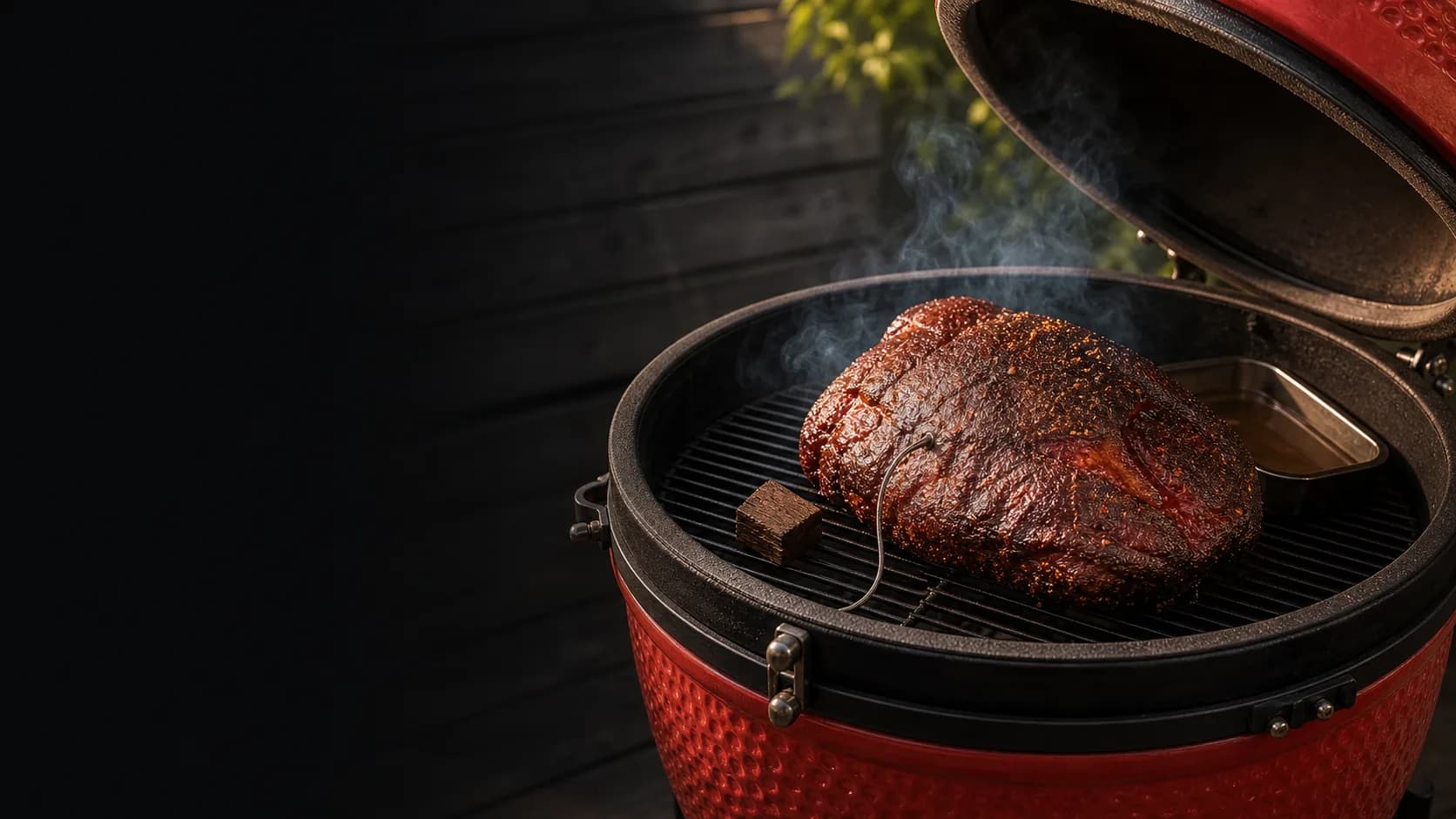
Low and slow step by step
This sequence gives you control over heat, timing and result. Use the steps as a baseline and adjust for thickness, product and real grate temperature.
Kies groot vlees
Low and slow werkt het best bij stukken met bindweefsel en vet, zoals procureur, brisket en ribs.
Stabiliseer laag
Breng de BBQ rustig naar 110-130 C en voorkom grote temperatuurschommelingen.
Doseer rookhout
Gebruik rook als ingrediënt. Te veel rook maakt bitter, dunne blauwe rook geeft balans.
Bouw bark op
Laat rub, rook en droog oppervlak rustig een korst vormen voordat je eventueel inpakt.
Gaar op gevoel en kern
Bij brisket en pulled pork telt prikmalsheid naast temperatuur. Rust daarna ruim.
When do you take it off the BBQ?
Where does Low and slow often go wrong?
Te veel rookhout
Meer rook is niet automatisch beter. Bitterheid is lastig te herstellen.
Te vroeg inpakken
Dan krijg je minder bark en meer gestoomd oppervlak.
Geen rusttijd plannen
Groot vlees heeft rust nodig om sappig te blijven.
Alleen op tijd koken
Low and slow is klaar op malsheid, niet op de klok.
Low and slow FAQ
Wat betekent low and slow?
Low and slow betekent lang garen op lage BBQ temperatuur, meestal rond 110-130 C.
Welke gerechten maak je low and slow?
Pulled pork, brisket, spareribs, procureur, short ribs en buikspek zijn klassiekers.
Moet ik vlees inpakken?
Niet altijd. Inpakken helpt door de stall heen, maar doe het pas als de bark stevig genoeg is.
Waarom duurt low and slow langer dan gepland?
Vleesdikte, vet, vocht, buitentemperatuur en echte roostertemperatuur kunnen de bereiding flink beïnvloeden.
When do you use Low and slow?
This technique page helps with searches such as BBQ techniques, barbecue method, temperature control, direct or indirect grilling, low and slow, smoke control, searing, internal temperature, resting time and common BBQ mistakes.