
Reverse sear
Cook gently with indirect heat first, then sear hot and fast for a perfect crust.
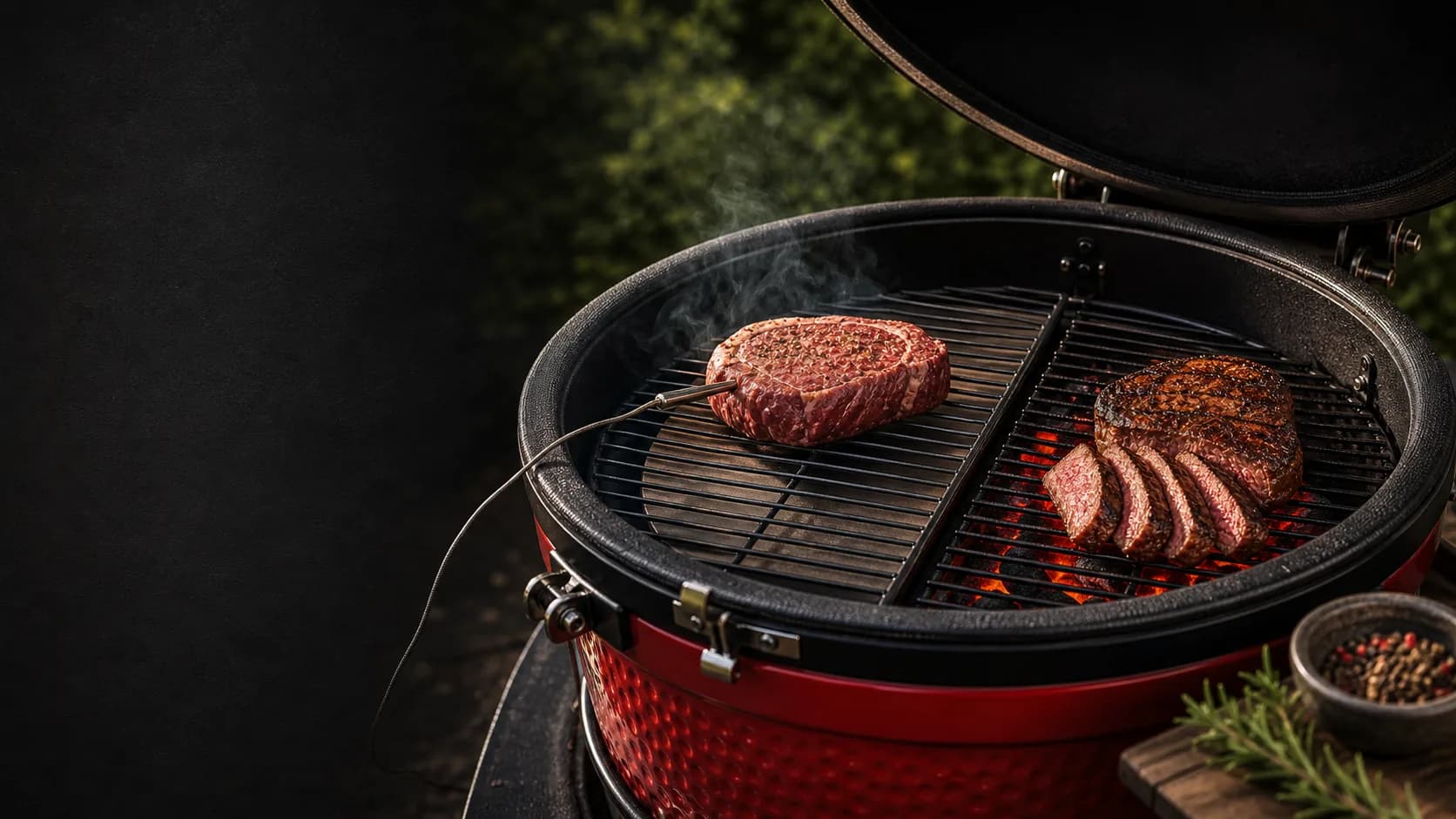
Reverse sear step by step
This sequence gives you control over heat, timing and result. Use the steps as a baseline and adjust for thickness, product and real grate temperature.
Prepare the BBQ
Build two zones: an indirect zone around 110-130 C and a hot direct zone for searing. Use an internal thermometer for control.
Cook gently indirect
Place the meat on the indirect side and cook until a few degrees below your target finish temperature.
Let the surface steam off
Take the meat off briefly while you bring the sear zone up to maximum heat. Pat the surface dry if needed.
Sear hot and fast
Grill briefly over direct heat until a deep brown crust forms. Turn regularly and avoid burning.
Rest and slice
Rest for 5-10 minutes and slice against the grain. This matters a lot for picanha, bavette and flank steak.
When do you take it off the BBQ?
Where does Reverse sear often go wrong?
Starting too hot
Then you are basically cooking a normal steak and lose the benefit of even doneness.
No thermometer
Reverse sear is about timing. Guesswork easily misses the right moment.
Searing a wet surface
Moisture slows the Maillard reaction. Dry the outside for a better crust.
Resting too long before searing
A short pause is fine, but do not let the meat fully cool before the final sear.
Reverse sear FAQ
What is reverse sear?
Reverse sear is a BBQ technique where meat is cooked gently with indirect heat first and then seared hot and fast for crust.
What BBQ temperature do you use?
Usually 110-130 C indirect, followed by a sear zone of 250 C or hotter.
Which meat works well?
Thick steaks, ribeye, entrecote, picanha, bavette, tomahawk and tenderloin work especially well.
Should meat rest after reverse sear?
Yes, rest briefly after searing so juices redistribute and temperature stabilizes.
When do you use Reverse sear?
This technique page helps with searches such as BBQ techniques, barbecue method, temperature control, direct or indirect grilling, low and slow, smoke control, searing, internal temperature, resting time and common BBQ mistakes.